Doing simple repairs is a great way to save money and become self-reliant. But sometimes even the simplest maintenance tasks can have adverse effects.
As beginner bike mechanics, be aware of these common maintenance mistakes we all make the first time…
1. Neglecting the drivetrain
Your bike collects dirt on every ride.
If not cleaned, the chain, cogs, and bearings will wear out, and derailleurs and brakes won’t function properly.
Regularly clean the drivetrain (cogs, chain, chainrings), especially if you ride in harsh conditions.
If not cleaned, the chain, cogs, and bearings will wear out, and derailleurs and brakes won’t function properly.
Regularly clean the drivetrain (cogs, chain, chainrings), especially if you ride in harsh conditions.
Ensure that each chain link receives a drop of lubricant. Lubricant must reach all the small mechanisms inside the chain. Wipe off any excess on the outside, as it only attracts dirt.
2. Too much lubricant on the chain
Lubrication reduces mechanical friction and prevents rust and wear, but too much can be worse.
Excess lubricant on the chain exterior attracts dirt, dust, and mud, leading to premature wear of the chain and cogs.
Use a lubricant suitable for your riding conditions and wipe the chain after each ride to remove any dirt. This saves time and money long-term and only takes a few seconds.
3. Incorrect tire pressure
Correct tire pressure can make the difference between a comfortable ride or a nightmare.
All tires indicate a recommended pressure range. Below this range, the tube may pinch or the tire may jump off the rim in corners. Too high pressure reduces grip, comfort, and risks tire deformation or blowouts.
All tires indicate a recommended pressure range. Below this range, the tube may pinch or the tire may jump off the rim in corners. Too high pressure reduces grip, comfort, and risks tire deformation or blowouts.
Always check tire pressure before riding! Experiment with different pressures for various road conditions: higher for smooth asphalt, lower for stones, but always within the recommended range.
4. Not checking the tire after a puncture
Many rush to replace the tube after a flat and skip inspecting the tire first.
A few minutes later, they get another flat.
A few minutes later, they get another flat.
To avoid wasting time and money, always carefully check the tire’s interior by hand, then inspect the outside. Often the object causing the puncture is lodged in the tire and must be removed.
If you notice cuts larger than 1 mm or cracks in the tire material, replace it immediately.
If you notice cuts larger than 1 mm or cracks in the tire material, replace it immediately.
5. Over-tightening components
Often bolts are overtightened. This can damage components or strip bolts, making removal impossible.
If a component fails while riding, it can have serious consequences.
If a component fails while riding, it can have serious consequences.
Consider using a torque wrench to tighten bolts precisely. Follow the manufacturer’s recommended torque. Affordable non-adjustable or higher-end adjustable torque wrenches are available.
6. Not replacing the chain on time
When was the last time you replaced your chain?
It’s easy to forget. The longer you wait, the more worn the cassette becomes, and the more expensive drivetrain replacement will be.
Chains have many moving parts exposed to weather each ride, so they wear faster than any other component. Overused chains and cogs can slip under load, potentially causing serious accidents.
Use a chain checker to monitor wear regularly. The chain is the cheapest drivetrain component to replace.
7. Using low-quality tools
Good tools can be expensive but are an excellent investment.
Using worn-out hex keys, for example, can round off bolt heads, forcing you to replace them. Damaged bolts are difficult to remove, often requiring a mechanic’s help.
Buy at least one good-quality hex key set and add it to your toolbox when you can. Other useful tools include tire levers, chain press, and a pump with a gauge.
8. Assembling components in the wrong order
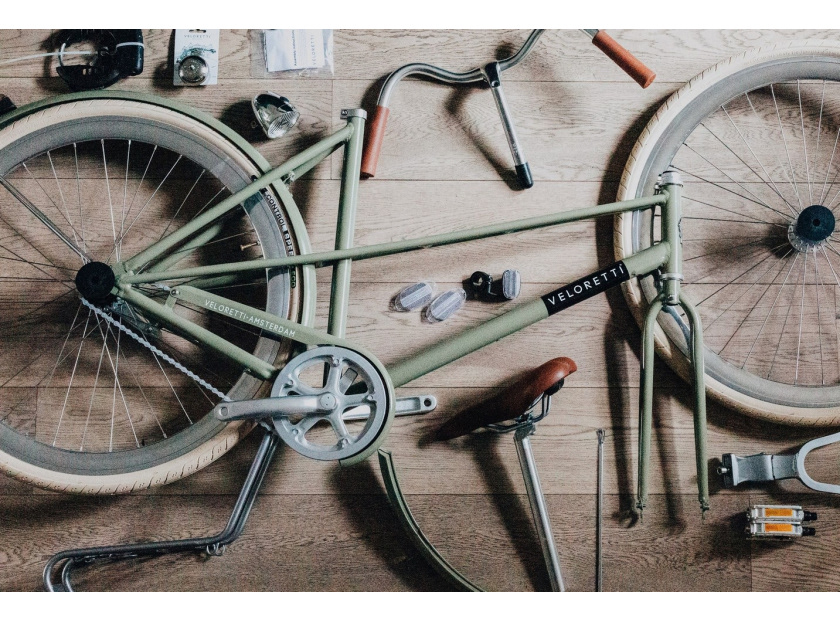
Many disassemble a mechanism and can’t reassemble it. Today, everyone has a camera or smartphone available.
Take photos before disassembling parts. Another tip: store small parts in recycled boxes to avoid losing them.
9. Irregular maintenance
Some people neglect regular bike maintenance.
This can be a safety hazard or leave you stranded if an old chain or derailleur cable breaks.
Bring your bike to a shop at least once a year for routine maintenance (or more often if used frequently).
To save money, you can do some maintenance at home, but be confident in what you’re doing. Research first and leave complicated tasks to professionals.
Summary
Bike maintenance can be frustrating and requires practice to become proficient.
Remember, everyone had to start somewhere and can learn from mistakes. Trust yourself and laugh when you make errors.
Of course, we recommend that if you can’t handle minor repairs, bring your bike to Easy Rider for professional advice and service.